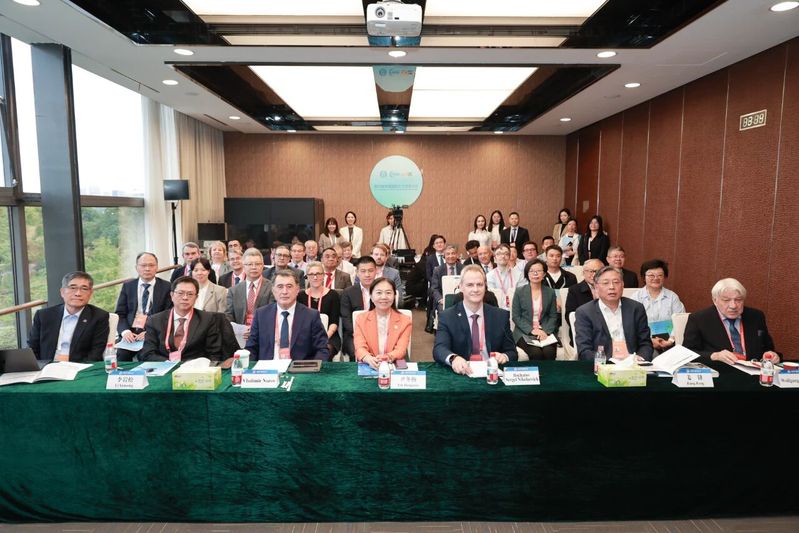
The 2025 European and American Sinologists Study Program: Seminar on Exchanges and Mutual Learning Among Civilizations and Chinese Modernization opened Tuesday at Shanghai International Studies University (SISU), bringing together nine Chinese scholars from Fudan, East China Normal, Tongji and SISU alongside European and American sinologists for a day-long exchange on China’s historical trajectory, technological change, and language education.
Hosted by the Shanghai Academy of Global Governance and Area Studies, the event centered on whether deeper civilizational dialogue could generate shared frameworks for global governance.
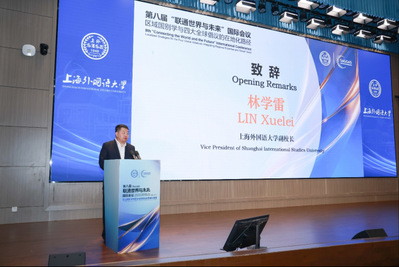
In his opening address, Jiang Feng, director of the academy, argued that Confucian ideals of harmony between humanity and nature and the European humanist emphasis on human dignity share a deep conceptual alignment. He suggested this common ethical ground could inform global climate governance and peaceful coexistence, urging scholars to mobilize cross-civilizational cooperation to tackle technology governance and humanity’s collective future.
The roundtable sessions produced broad consensus that China-Europe engagement must move beyond superficial exchange to confront underlying civilizational frameworks. Participants agreed that understanding China requires grappling simultaneously with its classical intellectual continuity and its rapid modern transformation, while shedding Western-centric analytical biases. Chinese scholars framed their country’s modernization as offering institutional and methodological alternatives to the predicaments facing global modernity, insisting that technological development—whether in artificial intelligence or climate science—must serve human flourishing and cannot replace humanistic judgment or cultural sensibility.
Western participants echoed these themes, recognizing China’s modernization as a distinctive, large-scale model with non-Western relevance. They stressed concrete cooperation over abstract theory, calling for expanded youth dialogues, scholarly exchanges, and joint research to root cultural understanding in lived experience rather than classroom instruction alone.
In closing, Jiang proposed turning the seminar into a sustained platform for tangible academic collaboration, including joint research, co-publications, and practical bridges for young scholars. The event was co-hosted by Hu Chunchun of SISU’s European Studies Institute and Hu Wenting of the university’s Center for Chinese Discourse and World Literature.